Buy gildafc.eu ?
We are moving the project
gildafc.eu .
Are you interested in purchasing the domain
gildafc.eu ?
domain@kv-gmbh.de · 0541-91531010
Buy gildafc.eu ?
Cation or anion?
A cation is a positively charged ion, while an anion is a negatively charged ion. Cations are formed when an atom loses electrons, resulting in a net positive charge, while anions are formed when an atom gains electrons, resulting in a net negative charge. The charge of a cation is indicated by a superscript plus sign (+), while the charge of an anion is indicated by a superscript minus sign (-). **
Which anion is formed?
The anion formed is chloride (Cl-). When sodium chloride (NaCl) dissolves in water, it dissociates into sodium cations (Na+) and chloride anions (Cl-). The chloride anion carries a negative charge and is attracted to the positive end of the water molecule, forming a hydrated chloride ion. **


Similar search terms for Anion
Top-Angebote
Products related to Anion:
-
Perfect Picks Market Piece Agility Training Rings Set For Speed Drills Football Training Equipment 10pcs BTurn every outdoor session into an exciting fitness challenge with these agility training rings designed for all ages. Whether you're coaching a team or keeping kids active, this versatile set transforms simple drills into fun, skillbuilding games....39,97 $*Shipping: 0,00 $Secure redirect to the provider
-
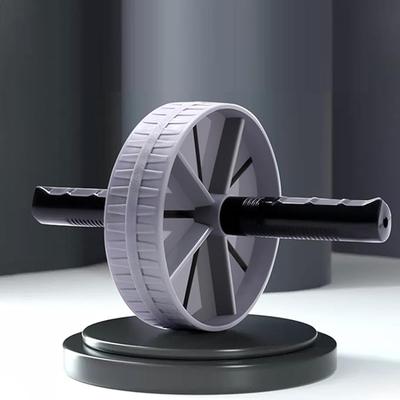
Healfit Counter Home Fitness Equipment, Abdominal Muscle Roller, ABS, Muscle Training, Weight Loss, Core Strength, Gym Accessories Home Fitness Equipment, Abdominal Muscle Roller, ABS, Muscle Training, Weight Loss, Core Strength, Gym AccessoriesTransform your home workouts with the Abdominal Muscle Roller crafted from durable ABS material. Designed to maximize your core strength, this versatile home fitness equipment is perfect for anyone looking to tone their abs, strengthen muscles, and...23,97 $*Shipping: 0,00 $Secure redirect to the provider
-
Uplift Picks Adjustable Agility Ladder Speed Training Equipment For Football And Fitness 600 CmBoost your speed, coordination, and performance with dynamic training. This agility ladder is designed to help athletes improve footwork, balance, and quickness in every session. Made for both beginners and advanced users, its perfect for sports...64,48 $*Shipping: 0,00 $Secure redirect to the provider
-
Perfect Picks Market Piece Agility Training Rings Set For Speed Drills Football Training Equipment 10pcs ATurn every outdoor session into an exciting fitness challenge with these agility training rings designed for all ages. Whether you're coaching a team or keeping kids active, this versatile set transforms simple drills into fun, skillbuilding games....34,97 $*Shipping: 0,00 $Secure redirect to the provider



-
What is the anion of potassium carbonate?
The anion of potassium carbonate is the carbonate ion (CO3^2-). This ion is composed of one carbon atom and three oxygen atoms, and it carries a 2- charge. When combined with a potassium cation (K+), it forms the compound potassium carbonate (K2CO3). **
-
Is the acid conjugate to the anion a weak acid if the anion is a good leaving group?
Yes, if the anion is a good leaving group, then the acid conjugate to the anion is likely to be a weak acid. This is because a good leaving group is typically stable and less likely to hold onto its proton, making the corresponding acid less likely to donate its proton. Therefore, the acid conjugate to the anion would be weak in terms of its ability to donate a proton in a chemical reaction. **
-
How do you distinguish a cation from an anion?
Cations are positively charged ions, while anions are negatively charged ions. Cations are formed when an atom loses one or more electrons, resulting in a net positive charge. Anions are formed when an atom gains one or more electrons, resulting in a net negative charge. One way to distinguish between cations and anions is to observe their behavior in a solution: cations are attracted to the negative electrode (cathode) in electrolysis, while anions are attracted to the positive electrode (anode). Additionally, cations are usually smaller in size than their parent atoms, while anions are larger. **
-
How is the reduction of the dichromate anion carried out?
The reduction of the dichromate anion is typically carried out using a reducing agent such as sulfur dioxide, iron(II) salts, or thiosulfate. These reducing agents donate electrons to the dichromate anion, causing it to be reduced to chromium(III) ions. The reaction is usually carried out in an acidic solution to provide the necessary conditions for the reduction to occur efficiently. **

How is the sodium cation connected to a chloride anion?
The sodium cation is connected to a chloride anion through ionic bonding. In this type of bonding, the sodium atom loses an electron to become a positively charged cation, while the chloride atom gains an electron to become a negatively charged anion. The opposite charges of the sodium cation and chloride anion attract each other, forming a strong bond between the two ions. This ionic bond creates a stable compound known as sodium chloride, or table salt. **
Why is there no KSO4 molecule? Why is it an anion?
There is no KSO4 molecule because potassium (K) is a metal and sulfate (SO4) is a polyatomic ion. When potassium combines with sulfate, it forms the ionic compound potassium sulfate (K2SO4), in which potassium loses an electron to become a positively charged ion (K+) and sulfate gains two electrons to become a negatively charged ion (SO4^2-). This ionic bond between the positively charged potassium ion and the negatively charged sulfate ion results in the formation of an anion rather than a molecule. **
Top-Angebote
Products related to Anion:
-
All Categories Goods Agility Speed Training Ladder For Football Footwork & Fitness Heavy Duty Exercise Equipment Agility Speed Training Ladder For Football Footwork & Fitness Heavy Duty Exercise EquipmentBoost your agility and footwork with this 8rung agility ladder, designed to take your fitness and football training to the next level. Whether you're an athlete or a fitness enthusiast, this training ladder will enhance your speed, coordination, and...47,97 $*Shipping: 0,00 $Secure redirect to the provider
-
Perfect Picks Market Piece Agility Training Rings Set For Speed Drills Football Training Equipment 10pcs BTurn every outdoor session into an exciting fitness challenge with these agility training rings designed for all ages. Whether you're coaching a team or keeping kids active, this versatile set transforms simple drills into fun, skillbuilding games....39,97 $*Shipping: 0,00 $Secure redirect to the provider
-
Healfit Counter Home Fitness Equipment, Abdominal Muscle Roller, ABS, Muscle Training, Weight Loss, Core Strength, Gym Accessories Home Fitness Equipment, Abdominal Muscle Roller, ABS, Muscle Training, Weight Loss, Core Strength, Gym AccessoriesTransform your home workouts with the Abdominal Muscle Roller crafted from durable ABS material. Designed to maximize your core strength, this versatile home fitness equipment is perfect for anyone looking to tone their abs, strengthen muscles, and...23,97 $*Shipping: 0,00 $Secure redirect to the provider
-
Cation or anion?
A cation is a positively charged ion, while an anion is a negatively charged ion. Cations are formed when an atom loses electrons, resulting in a net positive charge, while anions are formed when an atom gains electrons, resulting in a net negative charge. The charge of a cation is indicated by a superscript plus sign (+), while the charge of an anion is indicated by a superscript minus sign (-). **
-
Which anion is formed?
The anion formed is chloride (Cl-). When sodium chloride (NaCl) dissolves in water, it dissociates into sodium cations (Na+) and chloride anions (Cl-). The chloride anion carries a negative charge and is attracted to the positive end of the water molecule, forming a hydrated chloride ion. **
-
What is the anion of potassium carbonate?
The anion of potassium carbonate is the carbonate ion (CO3^2-). This ion is composed of one carbon atom and three oxygen atoms, and it carries a 2- charge. When combined with a potassium cation (K+), it forms the compound potassium carbonate (K2CO3). **
-
Is the acid conjugate to the anion a weak acid if the anion is a good leaving group?
Yes, if the anion is a good leaving group, then the acid conjugate to the anion is likely to be a weak acid. This is because a good leaving group is typically stable and less likely to hold onto its proton, making the corresponding acid less likely to donate its proton. Therefore, the acid conjugate to the anion would be weak in terms of its ability to donate a proton in a chemical reaction. **
Similar search terms for Anion
-
Uplift Picks Adjustable Agility Ladder Speed Training Equipment For Football And Fitness 600 CmBoost your speed, coordination, and performance with dynamic training. This agility ladder is designed to help athletes improve footwork, balance, and quickness in every session. Made for both beginners and advanced users, its perfect for sports...64,48 $*Shipping: 0,00 $Secure redirect to the provider
-
Perfect Picks Market Piece Agility Training Rings Set For Speed Drills Football Training Equipment 10pcs ATurn every outdoor session into an exciting fitness challenge with these agility training rings designed for all ages. Whether you're coaching a team or keeping kids active, this versatile set transforms simple drills into fun, skillbuilding games....34,97 $*Shipping: 0,00 $Secure redirect to the provider
-
Uplift Picks Adjustable Agility Ladder Speed Training Equipment For Football And Fitness 400 CmBoost your speed, coordination, and performance with dynamic training. This agility ladder is designed to help athletes improve footwork, balance, and quickness in every session. Made for both beginners and advanced users, its perfect for sports...63,48 $*Shipping: 0,00 $Secure redirect to the provider
-
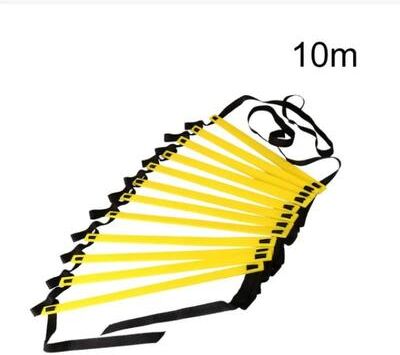
Uplift Picks Adjustable Agility Ladder Speed Training Equipment For Football And Fitness 10 MBoost your speed, coordination, and performance with dynamic training. This agility ladder is designed to help athletes improve footwork, balance, and quickness in every session. Made for both beginners and advanced users, its perfect for sports...78,48 $*Shipping: 0,00 $Secure redirect to the provider
-
How do you distinguish a cation from an anion?
Cations are positively charged ions, while anions are negatively charged ions. Cations are formed when an atom loses one or more electrons, resulting in a net positive charge. Anions are formed when an atom gains one or more electrons, resulting in a net negative charge. One way to distinguish between cations and anions is to observe their behavior in a solution: cations are attracted to the negative electrode (cathode) in electrolysis, while anions are attracted to the positive electrode (anode). Additionally, cations are usually smaller in size than their parent atoms, while anions are larger. **
-
How is the reduction of the dichromate anion carried out?
The reduction of the dichromate anion is typically carried out using a reducing agent such as sulfur dioxide, iron(II) salts, or thiosulfate. These reducing agents donate electrons to the dichromate anion, causing it to be reduced to chromium(III) ions. The reaction is usually carried out in an acidic solution to provide the necessary conditions for the reduction to occur efficiently. **
-
How is the sodium cation connected to a chloride anion?
The sodium cation is connected to a chloride anion through ionic bonding. In this type of bonding, the sodium atom loses an electron to become a positively charged cation, while the chloride atom gains an electron to become a negatively charged anion. The opposite charges of the sodium cation and chloride anion attract each other, forming a strong bond between the two ions. This ionic bond creates a stable compound known as sodium chloride, or table salt. **
-
Why is there no KSO4 molecule? Why is it an anion?
There is no KSO4 molecule because potassium (K) is a metal and sulfate (SO4) is a polyatomic ion. When potassium combines with sulfate, it forms the ionic compound potassium sulfate (K2SO4), in which potassium loses an electron to become a positively charged ion (K+) and sulfate gains two electrons to become a negatively charged ion (SO4^2-). This ionic bond between the positively charged potassium ion and the negatively charged sulfate ion results in the formation of an anion rather than a molecule. **
* All prices are inclusive of VAT and, if applicable, plus shipping costs. The offer information is based on the details provided by the respective shop and is updated through automated processes. Real-time updates do not occur, so deviations can occur in individual cases. ** Note: Parts of this content were created by AI.